



The Story Behind the Name, the Institution and the Leadership of His Royal Highness Paul Sande Etomeileng Emolot, Emorimor Papa Iteso III
In the history and cultural traditions of the Iteso people, names are more than personal identifiers. They carry memory, identity, responsibility, heritage and, in many instances, a message about the character, values and destiny of the person who bears them.
Among the names associated with the traditional leadership of the Iteso is Etomeileng, an Asapan cultural initiation name associated with the majestic figure of the elephant — ETOM.
The elephant represents strength, dignity, wisdom, resilience, leadership and the ability to move with purpose while remaining firmly connected to its community and environment.
It is within this cultural symbolism that the name Etomeileng carries significance beyond an individual name. It speaks to a tradition in which leadership is understood not merely as an honour, but as a responsibility to the community, its heritage and generations yet to come.
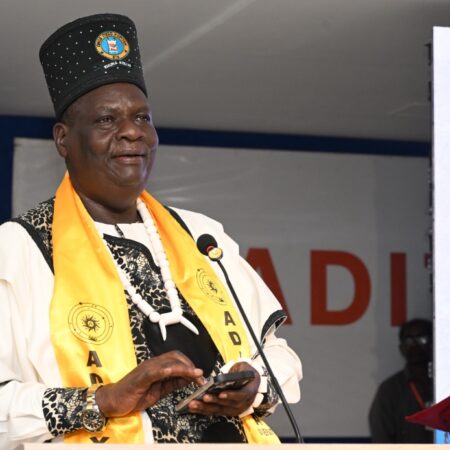
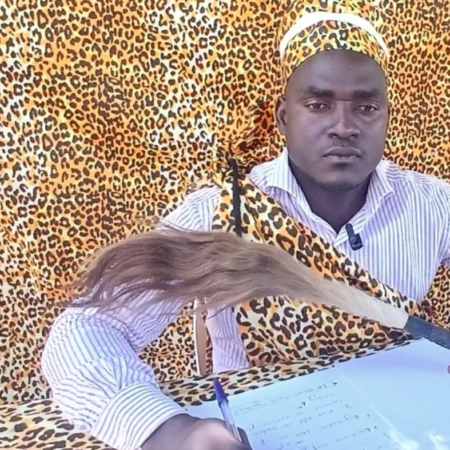
Today, that name is carried by His Royal Highness Paul Sande Etomeileng Emolot, Emorimor Papa Iteso III, the Paramount Traditional Leader of the Iteso and head of the Iteso Cultural Union (Einos Iteso Kopiten).
A NAME ROOTED IN CULTURE
The journey from Oduk to Etomeileng represents more than a change of name. It reflects the depth of Iteso cultural systems, where traditional names, initiation, identity and leadership are connected to the history and values of the people.
Asapan names form part of a cultural heritage through which identity, values and social responsibility are transmitted from one generation to another.
Etomeileng, therefore, is not simply a royal designation. It is a name that evokes the strength and majesty associated with the elephant — a creature that commands respect not merely through power, but through presence, endurance, wisdom and collective responsibility.
In the context of traditional leadership, these qualities provide a powerful metaphor for the responsibilities entrusted to a cultural leader.
The name becomes a reminder that authority is accompanied by duty, and that leadership is ultimately measured by service to the people.
EMORIMOR PAPA ITESO III
His Royal Highness Paul Sande Etomeileng Emolot was installed as the third Emorimor of the Iteso on 22 October 2022, succeeding a line of traditional leadership entrusted with safeguarding the identity, heritage and unity of the Iteso people.
Since his installation, his leadership has increasingly placed emphasis on cultural unity, education, economic transformation, community development and the preservation and promotion of Iteso heritage.
His public leadership has also extended beyond ceremonial responsibilities.
The Emorimor has consistently used cultural platforms to advocate for education and opportunity for young people. In 2025, the Iteso Cultural Union intensified its campaign against school dropouts, with the Emorimor calling for education to become a cornerstone of development in Teso, as reported by New Vision.
The emphasis reflects a broader understanding of traditional leadership: that culture must not only preserve the past, but must also help communities prepare for the future.
A traditional institution remains relevant when it can speak to the realities facing its people while preserving the values that define them.
CULTURE AS A FOUNDATION FOR DEVELOPMENT
For the Emorimor, culture is not isolated from development.
The preservation of language, traditions, food, music, ceremonies, clan structures and traditional institutions can coexist with education, entrepreneurship, investment, technology and modern economic development.
Indeed, culture can provide the foundation upon which sustainable development is built.
This philosophy has been reflected in the growing emphasis on agricultural transformation, enterprise development and the empowerment of young people.
The Emorimor has encouraged communities to recognise the economic potential of traditional livelihoods and agriculture, including cattle keeping and value addition, as part of the broader pursuit of household and community prosperity, as reported by The Standard.
Traditional leadership therefore becomes a bridge between generations — preserving what is valuable from the past while creating space for innovation, enterprise and opportunity.
The objective is not to choose between tradition and modernity.
It is to ensure that tradition provides identity while modernity provides new avenues for advancement.
EDUCATION AND THE NEXT GENERATION
One of the defining elements of the emerging leadership agenda is the recognition that the future of Teso depends heavily on the education, skills and empowerment of its children and youth.
In 2025, the Iteso Cultural Union secured an initiative providing five fully sponsored aviation scholarships annually for eligible Iteso students at Soroti’s civil aviation training institution, out of the total 15 students that the Government of Uganda provides Scholarships for with particular emphasis on students from disadvantaged families, as reported by Uganda Radio Network.
Such initiatives demonstrate an important principle: cultural leadership can be measured not only by ceremonies and titles, but also by the opportunities created for the next generation.
A community that preserves its heritage while investing in the education of its young people strengthens both its identity and its future.
The children of today are the custodians, professionals, entrepreneurs, leaders and cultural ambassadors of tomorrow.
To educate them is therefore to invest in the continuity of the Iteso people.
THE ATEKER CONNECTION
The story of the Iteso cannot be separated from the wider history of the Ateker peoples.
Across Eastern Africa and neighbouring regions, communities linked by historical, cultural and linguistic relationships continue to recognise the importance of cooperation, dialogue and cultural exchange.
The wider Ateker family includes communities such as the Iteso, Karamojong, Turkana, Toposa and other related peoples across the region.
The Ateker cultural movement provides an opportunity to strengthen these historical relationships while promoting peace, cultural preservation, people-to-people relations and socio-economic development.
In 2024, Uganda hosted discussions around the Ateker cultural festival, bringing renewed attention to the importance of cultural connections extending across national borders, as reported by the Uganda Broadcasting Corporation.
For contemporary traditional leadership, these relationships are increasingly important.
National borders may separate states, but cultural history can continue to provide a basis for cooperation, understanding and shared development.
The future of the Ateker family can be strengthened by recognising both the diversity of its communities and the historical bonds that connect them.
BUILDING A PERMANENT HOME FOR ITESO HERITAGE
Perhaps one of the most significant expressions of the current cultural vision is the development of Ere Iteso — the Iteso Palace.
The palace project was formally launched on 7 March 2026 in Soroti City, with the Vice President of the Republic of Uganda, H.E. Jessica Rose Epel Alupo, presiding over the groundbreaking and fundraising launch on behalf of President H.E. Yoweri Kaguta Museveni.
The project is intended to establish a permanent seat for the Emorimor and create an important centre for the preservation and promotion of Iteso culture, traditions and community unity.
The significance of Ere Iteso goes far beyond the physical structure.
- A palace is a symbol.
- It represents continuity.
- It represents belonging.
- It represents institutional memory.
- It represents the dignity of a people.
- And, most importantly, it provides future generations with a tangible connection to the history and cultural identity of their ancestors.
Ere Iteso should therefore be understood not simply as a construction project, but as a collective cultural aspiration.
It is a project whose significance will extend beyond the generation that builds it.
FROM LOCAL LEADERSHIP TO AFRICAN ROYAL DIPLOMACY
The vision associated with Etomeileng also extends beyond the borders of Teso.
His Royal Highness serves as Chairperson of the Council of Kings and Queens of the African Kingdoms & Diaspora Alliance (AKDA), an umbrella platform bringing African traditional royalty together with their descendants and communities in the Diaspora.
This responsibility reflects a wider recognition of the role traditional institutions can play in Africa’s cultural diplomacy.
African kingdoms and traditional authorities possess centuries of accumulated knowledge concerning identity, community organisation, customary values, traditional governance, conflict resolution and cultural preservation.
Connecting these institutions with the African Diaspora creates opportunities for cultural exchange, investment, heritage preservation, education and intergenerational dialogue.
It also creates an avenue through which African traditional leadership can contribute to the broader conversation about the continent’s identity, unity and future.
In this context, the Etomeileng identity becomes part of a much larger African story.
The story is no longer confined to Teso.
It becomes part of the continuing effort to connect African peoples, traditional institutions and the Diaspora through shared heritage and mutual respect.
LEADERSHIP BEYOND CEREMONY
Modern traditional leadership requires more than the performance of ceremonial duties.
- It requires listening to communities.
- It requires building institutions.
- It requires protecting culture.
- It requires supporting education.
- It requires encouraging economic participation.
- It requires creating bridges between generations.
- And it requires ensuring that cultural identity remains relevant in a rapidly changing world.
The leadership journey of Emorimor Papa Iteso III is increasingly associated with this broader understanding of cultural responsibility.
His engagements in education, development, cultural preservation and regional cooperation illustrate an approach in which tradition and contemporary development are not treated as opposing forces.
Instead, culture becomes the foundation upon which progress can be built.
A traditional leader’s role is therefore not simply to look backwards and preserve what once was.
It is also to look forward and ask what must be done today so that the heritage of the people remains strong tomorrow.
THE ELEPHANT AS A METAPHOR FOR LEADERSHIP
The symbolism of ETOM — the elephant — offers a fitting metaphor for this journey.
The elephant is powerful, but it does not need to constantly demonstrate its power.
- It is imposing, yet deeply connected to its community.
- It moves with patience.
- It remembers.
- It protects.
- It endures.
- And it leaves a legacy that continues beyond its own lifetime.
These qualities provide a meaningful interpretation of Etomeileng as a cultural identity.
Leadership, after all, is ultimately measured by what remains after the leader has passed through.
- What institutions were built?
- What children were educated?
- What traditions were preserved?
- What conflicts were resolved?
- What opportunities were created?
- What legacy was handed to the next generation?
These are the questions through which leadership is ultimately remembered.
A LEGACY FOR GENERATIONS
The journey from Oduk to Etomeileng is therefore a story about more than one individual.
- It is a story about identity.
- It is a story about cultural continuity.
- It is a story about the responsibility of traditional leadership.
- It is a story about Teso and the wider Ateker family.
And it is a story about Africa’s continuing search for ways to honour its heritage while building a stronger and more united future.
His Royal Highness Paul Sande Etomeileng Emolot, Emorimor Papa Iteso III, stands within this continuing tradition.
- The name Etomeileng carries the memory and symbolism of the elephant.
- The institution of the Emorimor carries the responsibility of the people.
- Ere Iteso represents the physical preservation and institutional continuity of that heritage.
- And the engagement with African traditional leaders and the Diaspora represents a vision that reaches beyond one community towards a more connected African cultural family.
The responsibility of every generation is to receive its heritage, protect what must be preserved, improve what can be improved, and pass the inheritance forward.
- That is the deeper meaning of cultural leadership.
- That is the responsibility of a royal identity.
- That is the journey from Oduk to Etomeileng.
And that is the legacy being written for the generations to come.
Eyalama noi. Emuria Koliai.
Amb. David EMOOT
Minister for Information, Communications & Technology
Ambassador, South Africa & SADC
Teso Kingdom

Other Articles

ICU Urges Teso Farmers to Embrace Poultry Farming and Cooperatives
Emorimor PAPA ITESO III’S visit to Nambale


No Comment! Be the first one.