



By Peterson Hiirya.
The Iteso Cultural Union (ICU) has urged farmers in Teso to embrace livestock farming, strengthen cooperatives and acquire modern farming knowledge as part of efforts to improve household incomes and transform agriculture in the region.
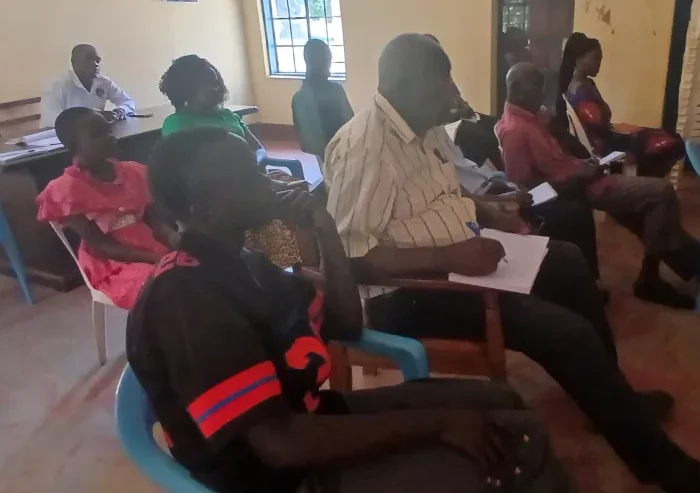
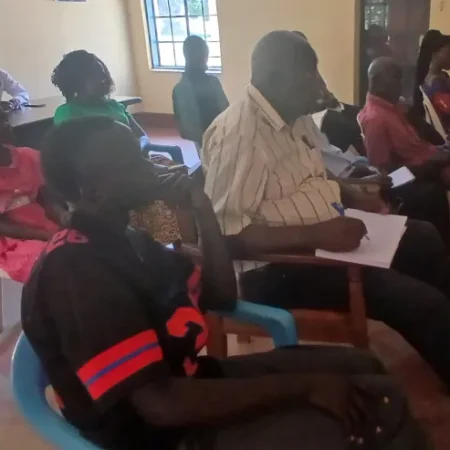
The call was made by Steven Ojacor, Minister of Information at ICU, while addressing farmers and trainees during a poultry farming training session held at the ICU offices.
Ojacor said many farmers in Teso continue to face challenges, including limited access to affordable credit, extension services and adequate knowledge, which have affected their ability to expand agricultural enterprises.
He said Teso has not yet developed strong farmer cooperatives capable of providing affordable financing to their members, unlike some other parts of the country.
“In Buganda, farmers have developed their societies and cooperatives to the extent that their cooperatives can provide loans. Their cooperatives have grown significantly,” Ojacor said.
He attributed some of the challenges facing Teso to years of insecurity, including the Lord’s Resistance Army insurgency, as well as floods and other disasters that have affected the region’s development.
Ojacor said the region therefore needs interventions that can help farmers diversify their sources of income instead of relying mainly on crop farming.
“Instead of looking at the garden as the only source of income, where we grow cassava, millet and sorghum, can we also introduce livestock farming?” he asked.
Ojacor Calls for Modern Poultry Farming
Ojacor, who said he is also a farmer, encouraged farmers to move beyond reliance on local chicken breeds and acquire knowledge about improved poultry production.
He said local breeds often take longer to provide returns compared to improved breeds.
According to Ojacor, the poultry market provides an opportunity for farmers because there is demand for chicken.
“There is a market for anything called chicken,” he said, urging farmers to take advantage of the existing market by improving production.
He said farmers should also value their produce and explore ways of adding value instead of selling livestock and agricultural products at low prices.
Lessons from Other Communities
Ojacor also shared lessons he said he had gained from travelling and interacting with other communities, particularly in Karamoja.
He said the experience challenged the perception that communities in Karamoja are poor, pointing to livestock ownership as one example of wealth.
He said some people in Karamoja own large numbers of cattle, while traders from other areas travel to the region to purchase livestock.
“Those cows are money,” Ojacor said.
He also pointed to other economic activities, including the production of grasshoppers and sunflower, as examples of opportunities that communities can exploit.
Ojacor said Teso farmers should similarly identify opportunities within agriculture and livestock farming and turn them into sustainable businesses.
Farmers Encouraged to Attend Poultry Training
Meanwhile, Abraham Ariko, ICU Director of Agriculture, said the poultry training was aimed at equipping farmers with practical knowledge to improve production.
Ariko said the training was conducted by Uzima Chicks and focused on important aspects of poultry farming, including vaccination, marketing, housing and feeding.
“We are very excited today because we have had a very successful training on poultry farming. Our farmers have been trained by Uzima Chicks, and they have been very motivated by the training,” Ariko said.
He said farmers have for a long time faced challenges in understanding key aspects of poultry management, particularly vaccination, feeding and proper housing.
Ariko explained that the training also focused on rearing improved chicken breeds capable of producing more eggs and meat and with better disease resistance.
He said Uzima supplies one-day-old chicks that are already vaccinated and capable of maturing faster.
The ICU Director of Agriculture said the organization has been provided with five more training sessions by Uzima Chicks to continue training farmers across Teso.
He urged poultry farmers to turn up for the sessions whenever they are held.
“I encourage many poultry farmers in Teso to turn up for these trainings whenever they are there, so that we take up poultry farming as a serious agro-enterprise that will change and transform the lives of Teso,” Ariko said.
The ICU says strengthening farmer knowledge, promoting livestock farming and building stronger farmer organizations can help farmers increase production, access markets and improve their livelihoods.

Other Articles



No Comment! Be the first one.